Claim denials remain one of the most persistent financial challenges in healthcare billing. Even a small percentage of rejected claims can disrupt revenue flow and increase administrative workload. Many medical practices spend valuable time correcting documentation, resubmitting claims, and responding to payer requests.
This is where denial management in medical billing becomes essential. It is the process of identifying denied claims, correcting the underlying issue, and resubmitting them for payment. In 2026, artificial intelligence is playing a stronger role in this process. AI tools help healthcare providers identify patterns, detect errors early, and prevent claim denials before submission.
Healthcare organizations that adopt AI-supported workflows are seeing measurable improvements in reimbursement timelines and billing accuracy.
What Is Denial Management in Medical Billing?
Denial management refers to the systematic process of handling rejected insurance claims. A claim denial occurs when an insurer refuses to reimburse a provider for a rendered service. The refusal may result from missing documentation, coding errors, or policy restrictions.
Effective denial management in medical billing focuses on three main goals:
- Identifying the cause of denial
- Correcting the claim
- Preventing the same issue in the future
According to the Centers for Medicare & Medicaid Services, accurate documentation and correct coding remain critical to ensuring claims are processed successfully.
Without a structured denial management strategy, healthcare practices risk significant revenue loss.
Common Causes of Claim Denials
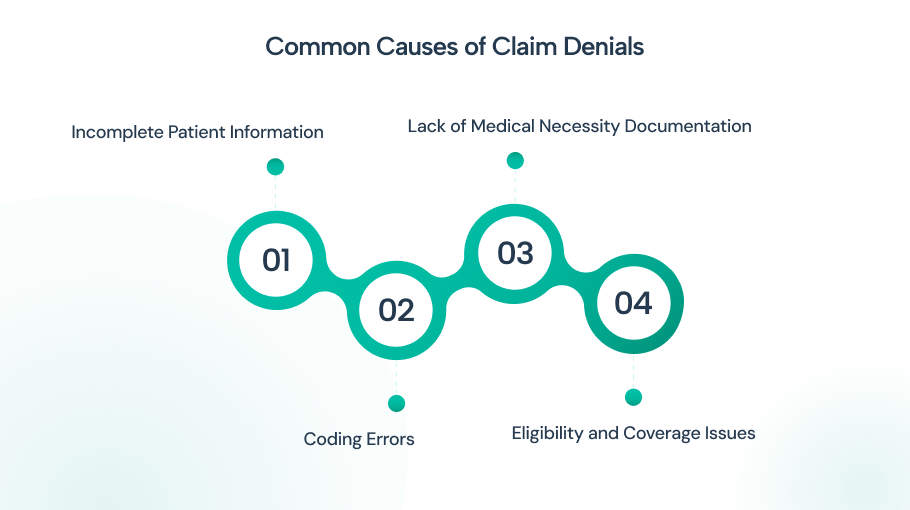
Before discussing AI solutions, it is important to identify why claims are denied in the first place.
Incomplete Patient Information
Incorrect demographic data is one of the most common reasons for claim rejection. Missing policy numbers or incorrect patient details can prevent insurers from processing the claim.
Coding Errors
Medical coding mistakes usually lead to claim denials. When diagnosis codes do not match procedure codes, insurers may reject the claim.
Lack of Medical Necessity Documentation
Insurers require clear documentation that explains why a service was medically necessary. If documentation is insufficient, the payer may deny reimbursement.
Eligibility and Coverage Issues
If a patient’s insurance coverage has expired or does not include the service provided, the claim may be denied.
Organizations such as the Healthcare Financial Management Association highlight that proactive denial tracking significantly improves revenue recovery.
How AI Is Transforming Denial Management in Medical Billing in 2026
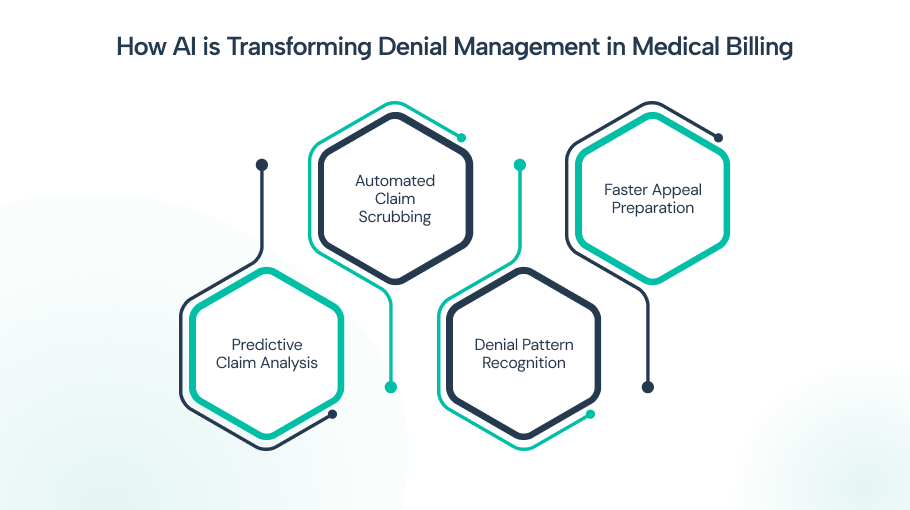
Artificial intelligence is reshaping billing workflows across healthcare organizations. Instead of responding to denials after they occur, medical billing services providers now use AI systems to predict problems before claims are submitted.
Predictive Claim Analysis
AI tools review historical claim data and identify patterns linked to denials. The system alerts medical billers if a claim contains similar risk factors. This allows corrections before submission, reducing rejection rates.
Automated Claim Scrubbing
Modern AI platforms like cloud-based medical billing software scan claims for coding mismatches, missing information, or payer policy conflicts. This process occurs instantly during claim preparation. Billing teams receive immediate alerts when an issue is detected.
Denial Pattern Recognition
AI systems analyze denial reports across thousands of claims. Over time, the system recognizes trends related to specific procedures, payers, or documentation gaps. Healthcare providers can then adjust workflows to address recurring issues.
Faster Appeal Preparation
When a claim denial occurs, AI systems assist with documentation retrieval. The software gathers clinical notes, coding details, and supporting evidence. This shortens the time required to prepare appeals and improves approval chances.
Researchers from Stanford University have reported that machine learning models can help healthcare organizations detect billing errors earlier and improve claim processing efficiency.
Preparing for the Future of AI in Medical Billing
Artificial intelligence will continue to strengthen denial prevention strategies in healthcare billing. Future systems will focus on identifying claim risks earlier while guiding billing teams on how to correct issues before submission. Key advancements expected in the coming years include:
Predictive Claim Approval Scoring: AI tools will analyze claims and assign approval probability scores. Billing teams will then identify high-risk claims early and correct documentation or coding before submission.
Real-Time Documentation Validation: Advanced AI models will review clinical documentation as it is created. If required billing details are missing, the system can alert providers immediately.
Deeper Integration Across Revenue Cycle Systems: Emerging AI solutions will connect more closely with electronic health records and billing platforms. This integration allows billing teams to identify claim risks earlier in the revenue cycle.
Final Word
Claim denials affect revenue stability for many healthcare organizations. Without an effective strategy, denied claims create administrative delays and financial loss.
Modern technology is changing how providers address this challenge. AI tools identify potential problems before claims reach insurers, helping billing teams gain faster insights into documentation gaps and coding errors.
As healthcare systems continue to adopt advanced billing technology, denial management in medical billing will become more proactive and efficient. Organizations that combine AI tools with strong billing practices will be better prepared to maintain consistent reimbursement and operational stability in the years ahead.
Frequently Asked Questions
Denial management refers to the process of identifying denied claims, correcting the issue, and resubmitting the claim to the insurer for payment.
Claims may be denied due to incomplete patient information, coding errors, lack of documentation, or insurance coverage issues.
AI analyzes claim data, detects potential errors before submission, and identifies patterns that lead to denials. This allows billing teams to correct issues early.
AI supports billing professionals by automating repetitive tasks. Human expertise remains essential for reviewing documentation, resolving complex cases, and managing payer communication.
Tools such as automated claim scrubbing systems, analytics platforms, and integrated billing software help healthcare organizations identify errors early and prevent denials.