
In healthcare, even the smallest details can make a big difference, and patient demographics are a perfect example. These details include a patient’s age, gender, contact information, and insurance data. Accurate demographics not only help providers deliver personalized care but also ensure smooth and error-free billing. A single mistake in this information can lead to claim denials or delayed payments.
That’s why we’ve put together this guide to help you understand and manage patient demographics.
What are Patient Demographics?
Demographic data refer to the personal and identifying details collected during registration or intake that help healthcare providers recognize and manage each patient’s record. This includes name, age, gender, address, contact number, insurance details, and emergency contact information. Some practices also record race, ethnicity, occupation, and language preferences to support inclusive care.
These details may seem routine, but they define how patients interact with the healthcare system. From scheduling appointments to sending lab results, every step depends on accurate demographic data. Incomplete or outdated information can disrupt workflows, delay communication, and even lead to errors in billing and reporting.

Why Accurate Patient Demographics Data Is Essential
Patient demographics information is a key part of every healthcare process, from billing to communication and patient care. They help providers manage claims accurately, stay connected with patients, and deliver better treatment outcomes. Here’s how they make a difference:
Accurate Billing and Reimbursements
It helps identify the correct payer, coverage type, and plan details needed for claim submission. When information such as date of birth, insurance ID, and address is accurate, claims are processed faster and with fewer denials.
Better Patient Communication
Updated demographic data helps clinics reach patients easily for reminders, billing updates, and follow-ups. When phone numbers or addresses are outdated, communication gaps can cause missed appointments or payment delays.
Improved Quality of Care
Demographics such as age, gender, and medical history guide providers in understanding health risks and planning preventive care. For example, knowing a patient’s age group or ethnicity can help identify conditions that need early screening or special attention.
Compliance and Reporting
Accurate demographic records support compliance with payer and government requirements. This ensures that reports, audits, and insurance submissions meet all necessary regulations.
Building Patient Trust
Understanding a patient’s background, language, and preferences helps providers communicate more effectively and deliver care that feels respectful and personalized.
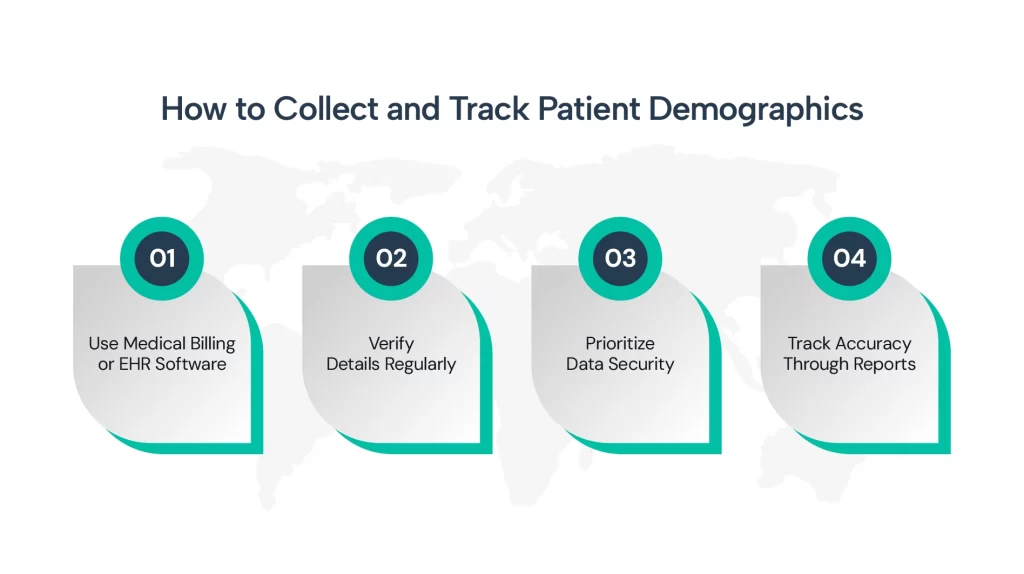
How to Collect and Track Patient Demographics
Accurate demographic details start with a clear process and the right tools. Every piece of information from a patient’s address to their insurance details should be collected, verified, and updated systematically.
Use Medical Billing or EHR Software
Enter and store all demographic data digitally using AI medical billing software or an EHR system. These tools help keep information organized, accessible, and consistent across departments.
Verify Details Regularly
Make it a routine to confirm patient details during every visit. Updating even minor changes, such as a new address or phone number, ensures your records remain accurate over time.
Prioritize Data Security
Protect all demographic data by using secure, encrypted systems. Limit access to authorized personnel only to maintain patient privacy and compliance with HIPAA regulations.
Track Accuracy Through Reports
Use built-in reporting tools to review demographic data regularly. These reports can help you identify incomplete, inconsistent, or outdated entries and make timely updates to keep information reliable.
Common Challenges in Capturing Patient Data
Collecting accurate patient demographic data may seem simple, but in practice, it often comes with errors and inconsistencies. Many healthcare facilities still rely on manual data entry, leading to spelling mistakes, outdated contact details, or incomplete insurance information.
Other challenges include language barriers, a lack of patient education, and limited staff training on data accuracy. When demographic data is incorrect, it affects everything from claim approvals to patient follow-ups. These small mistakes can cause big issues like billing delays, denied claims, and even poor patient experiences.
How AI Helps in Managing Patient Demographics
AI billing software is changing how healthcare organizations manage patient demographic data. Instead of spending hours on manual data entry, these intelligent systems automate the entire process from collecting patient details to validating them against insurance and EHR databases.
Modern AI-driven platforms can instantly verify a patient’s name, date of birth, policy number, and coverage details before a claim is submitted. They detect missing fields, incorrect codes, or mismatched information that could otherwise lead to claim denials. This proactive verification ensures every claim starts with accurate demographic data.
Advanced systems also use machine learning to identify patterns in denied claims and automatically correct recurring demographic errors. Over time, the software “learns” to improve data accuracy, minimize manual intervention, and reduce administrative costs.
For providers, AI medical billing software doesn’t just save time; it strengthens compliance, enhances reporting accuracy, and builds a more transparent billing process. With automated demographic management, healthcare teams can focus less on paperwork and more on patient care.
Accurate Data = Better Outcomes
Healthcare success starts with accurate data, and patient demographics are where it begins. Every claim, every diagnosis, and every patient interaction depends on the accuracy of those basic details: name, date of birth, contact, and coverage. Yet, these small details can be the difference between fast reimbursement and a denied claim.
Accurate demographic management isn’t just about reducing errors; it’s about creating a system that listens to patients through their data. Most of the healthcare providers use AI billing software to track data accuracy. These tools not only improve operational efficiency, but they also improve care itself.
As the industry leans toward automation and analytics, demographic information becomes more than administrative records. They become the foundation of smarter billing, stronger compliance, and more personalized care. In the end, every correctly entered address, insurance ID, and phone number represents something bigger: a patient who gets the care they deserve, without the delay or denial.
Frequently Asked Questions
They ensure correct patient identification, improve billing accuracy, and support better communication and treatment outcomes.
It includes name, date of birth, gender, address, contact, insurance details, and sometimes race, occupation, or language preference.
Accurate demographic data helps prevent claim denials, billing errors, and payment delays by matching patient and insurance details correctly.
To maintain complete and accurate patient records that support care delivery, reporting, and reimbursement processes.
Hospitals can use AI-based billing or EHR systems to collect, verify, and update demographic information efficiently and securely.