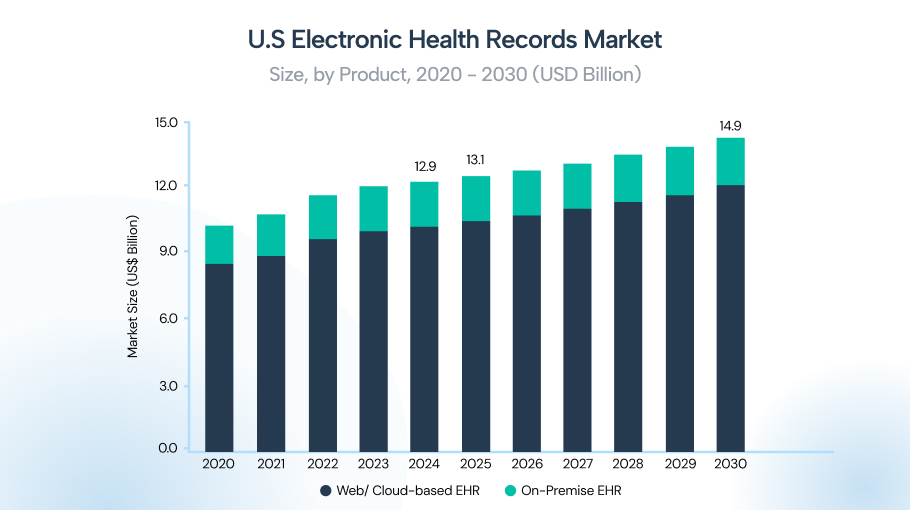
Electronic medical billing is the process by which healthcare providers create and submit insurance claims online rather than on paper. This digital healthcare billing approach has rapidly become the norm in the U.S. For example, the U.S. electronic health records market was valued at approximately USD 12.9 billion in 2024 and is expected to expand at a compound annual growth rate (CAGR) of 2.55% between 2025 and 2030.
Electronic billing allows providers to replace paperwork with automated systems, boosting efficiency and accuracy in the claims process. It matters because healthcare administrative costs are enormous. The U.S. spends billions each year on billing functions, so even small efficiency gains can save providers millions.
In this guide, we explain how online medical billing works, explore its benefits and challenges, and discuss the value of using healthcare billing software and other tech-enabled billing solutions.
What is Electronic Medical Billing?
Electronic billing in healthcare involves using digital tools to manage the revenue cycle. Instead of paper forms, providers use specialized systems to capture services as billable codes and submit claims electronically to insurers.
The core of digital billing is the health claim, which is a detailed invoice for services provided, including diagnosis and procedure codes. Under HIPAA rules, claims must use standardized EDI formats. For instance, the ANSI ASC X12N 837P format is widely used for claims submission.
Key Steps in Electronic Claims
The electronic billing process typically follows these steps:
- Coding and Charge Capture: Patient encounters (visits, procedures, tests) are translated into standardized medical codes (ICD, CPT, etc.). These codes drive the claim details.
- Claim Submission: The provider’s system packages the claim data into an EDI transaction (like HIPAA 837) and sends it to a clearinghouse or directly to the payer. Clearinghouses act as intermediaries that validate and forward claims to multiple insurers.
- Eligibility Checks: Systems perform real-time insurance verification (ANSI 270/271 transactions) before or during billing, reducing the chance of denials due to coverage issues.
- Status Tracking: Providers can use electronic inquiries (ANSI 276/277) to check claim status. This lets staff see if a claim was received, paid, or denied without waiting for mail.
- Adjudication and Remittance: After processing the claim, the insurer issues an electronic remittance (ANSI 835) detailing payments, adjustments, or denials. The provider’s software uses this ERA to post payments and flag any issues.
Online medical billing automates the flow of information through the revenue cycle, from service entry to payment posting, using standardized formats.
Benefits of E-medical Billing
Moving from paper to electronic medical billing brings significant advantages:
- Reduced Errors: Automated checks catch typos and invalid codes before submission, resulting in fewer rejections. Standardized digital forms ensure data is captured correctly and processed faster.
- Faster Payments: With 95% of claims sent electronically, insurers process them much more quickly than mailed claims. Many providers see higher first-pass acceptance and receive electronic remits (ERAs) sooner.
- Lower Costs: E-billing cuts paperwork and staff time. Given roughly $360B spent on billing each year, even small efficiency gains yield big savings. Paper, printing, and postage expenses also drop.
- Compliance and Security: Digital billing tools enforce HIPAA standards and encrypt data. Dedicated billing software can “increase accuracy and speed” while ensuring regulatory compliance.
- Visibility and Patient Access: Electronic systems offer instant reporting on claim status. Many also provide online patient portals for billing and payments, which speed up collections and improve patient convenience.
Overall, medical billing optimizes revenue cycle management, resulting in more reliable cash flow and less time spent on manual tasks.
Electronic Medical Billing Challenges & Considerations
Despite its advantages, digital healthcare billing poses some challenges:
- Upfront Costs & Training: Clinics must invest in new software, hardware (or cloud services), and train staff. Smaller practices, especially, may struggle with these initial costs.
- Data Security: Digital records must be protected. Systems need strong encryption, access controls, and regular backups to meet HIPAA data-security requirements.
- Reliability: Software glitches or network outages can halt billing. If a system goes down, claims processing stops. Regular maintenance and support are essential to avoid long downtime.
- Integration Challenges: Billing software often integrates with EHRs, practice management systems, and clearinghouses. Ensuring these systems work together can be complex. Data format mismatches may require manual fixes.
- Payer-Specific Rules: Each insurer applies different edits and companion guides. A claim that passes one payer’s checks might be rejected by another’s. Advanced billing systems include rules engines, but providers must handle exceptions.
Providers should plan carefully for these issues, ensuring training, backups, and vendor support to ensure their electronic medical billing runs smoothly.
Healthcare Billing Software & Technology
At the heart of digitized medical billing is specialized software. Medical billing software often integrates directly with EHR and practice management systems, so patient data and coding flow smoothly into claims. Modern billing solutions provide:
- Claim Scrubbing: Automated checks catch missing data or errors before submission.
- Eligibility Verification: Real-time insurance checking (ANSI 270/271) to confirm coverage.
- Clearinghouse Connectivity: Automates the sending of claims to payers and the receipt of remittances.
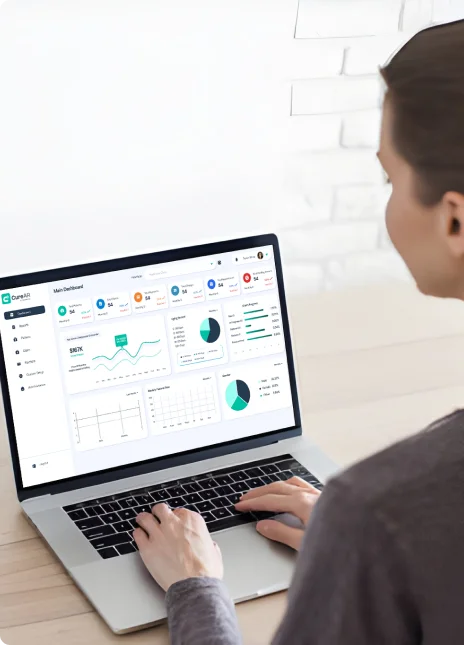
- Reporting/Analytics: Dashboards for key metrics (denial rates, collections, etc.).
Well-designed systems can improve the accuracy and speed of the billing cycle. Providers can choose between cloud-based and on-premises solutions. Cloud tools often lower upfront costs. The key is selecting software that fits the practice and integrates with its EHR.
The Bottom Line
Electronic medical billing transforms how healthcare is paid. Replacing paperwork with digital processes makes claims faster, more accurate, and more secure. Nearly all hospitals and practices now rely on electronic billing and EHRs to handle billing tasks. This matters not only for cost savings but also for patient care.
The benefits of online medical billing for healthcare providers are compelling, though organizations must manage setup costs and data security carefully. As more providers adopt these tools, electronic billing is poised to become the norm in healthcare finance.
Frequently Asked Questions
An ERA is the electronic version of an Explanation of Benefits. It details how insurers paid or adjusted claims. Providers use ERAs to post payments and automatically flag any denials.
Yes. For Medicare, the law now requires nearly all initial claims to be submitted electronically. Under HIPAA’s standards, payers must accept claims in the prescribed electronic format.
Absolutely. Cloud-based solutions and billing services allow even small practices to send and manage e-claims without heavy IT infrastructure.
If a claim is denied, the provider is notified with an error code and explanation. Staff can then correct the issue and resubmit the claim electronically for reprocessing.
Common models include monthly SaaS subscriptions, per-claim fees, percentage-of-collections RCM arrangements, plus one-time setup or integration charges.