
Healthcare billing has become significantly more complex over the past decade. Payer rules change frequently. Documentation standards continue to tighten. Regulatory oversight is expanding. At the same time, providers are expected to maintain financial stability while delivering high-quality care.
In this environment, the type of billing system an organization uses directly affects revenue performance, compliance, and administrative workload. Many practices still rely on traditional, on-premise systems built for an earlier reimbursement landscape.
Others are transitioning to modern, Cloud-Based Medical Billing Software designed for automation and scalability. Understanding the differences between CureAR and traditional billing systems is essential for leaders who want predictable cash flow, operational efficiency, and long-term growth.
Understanding Traditional Billing Systems
Traditional billing systems are typically on-premise software platforms installed locally within a healthcare organization. They often require manual updates, server maintenance, and internal IT support.
In the past, these systems worked well because payer rules were simpler and claim volumes were lower. But as healthcare became more digitized, the gaps started to show.
Common characteristics of traditional billing systems include:
- Manual claim scrubbing and limited automation
- Slower payment posting processes
- Minimal real-time reporting
- Heavy reliance on internal staff for maintenance
- Delayed system upgrades
According to the Centers for Medicare & Medicaid Services, administrative complexity continues to increase across healthcare reimbursement programs. As payer requirements grow more sophisticated, systems that depend heavily on manual workflows often struggle to keep pace.
For billing teams, this means more rework.
For administrators, it means unpredictable cash flow.
What Makes CureAR Different?
CureAR operates on a cloud-first infrastructure designed to modernize revenue operations. Unlike legacy systems, it leverages automation, analytics, and AI-assisted workflows to improve billing accuracy and speed.
Instead of relying on static installations, Cloud-Based Medical Billing Software allows providers to access data securely from anywhere while receiving automatic updates that reflect regulatory changes.
This matters because healthcare compliance is not static. The U.S. Department of Health & Human Services emphasizes the importance of secure and standardized electronic transactions under HIPAA guidelines. Cloud-native systems are typically better positioned to implement these changes without manual patchwork.
For IT teams and providers, this means fewer maintenance burdens and uninterrupted billing operations.
CureAR vs Traditional Billing Systems: What’s Better?
This comparison breaks down how CureAR differs from traditional billing systems and what those differences mean for operational efficiency, compliance, and long-term financial performance.
Automation vs Manual Intervention
One of the biggest distinctions between CureAR and traditional billing systems is automation depth.
Legacy platforms often identify errors only after a claim is rejected. Staff must then investigate, correct, and resubmit the claim, a process that adds cost and delays payment.
Modern platforms shift the process earlier in the cycle.
Here’s how automation changes outcomes:
- Pre-submission claim validation reduces first-pass denials.
- Automated eligibility verification prevents billing inactive coverage.
- Real-time payment posting accelerates reconciliation.
- Denial trend analytics identify recurring root causes.
Research published by the American Medical Association notes that claim rework significantly increases administrative expenses. Reducing avoidable denials directly protects operating margins. Automation reduces repetitive tasks and strengthens financial predictability for billing staff and executives.
Scalability and Growth Readiness
Traditional systems are often rigid. Adding new providers, expanding to multiple locations, or integrating telehealth services may require infrastructure upgrades or complex configuration.
Cloud-Based Medical Billing Software is built for scalability. Because infrastructure is hosted remotely, practices can expand operations without purchasing additional hardware or installing new servers.
This flexibility becomes especially important for:
- Multi-location practices
- Growing specialty groups
- Organizations expanding into value-based care
- Remote billing teams
Growth should not require rebuilding your billing foundation. Systems should scale as your organization evolves.
Data Visibility and Strategic Insight
Traditional billing systems typically provide static reports. Data must be manually exported and analyzed. By the time leadership reviews performance metrics, the information may already be outdated.
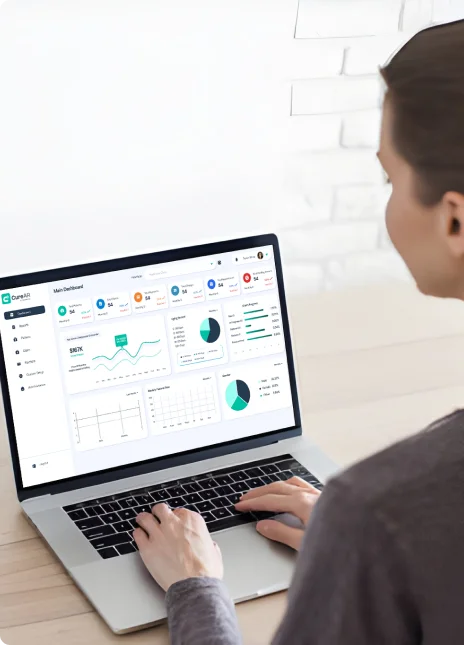
CureAR emphasizes real-time dashboards and predictive insights. Rather than reacting to denials after revenue drops, administrators can monitor trends proactively.
This level of transparency aligns closely with broader digital transformation trends discussed in healthcare informatics research from institutions such as Harvard Medical School, which highlight the increasing role of data analytics in operational efficiency.
Security and Compliance Considerations
Security remains a top concern when comparing billing systems. On-premise systems provide a sense of physical control, but they also place full responsibility on internal IT teams.
Cloud-based platforms typically implement:
- End-to-end encryption
- Automatic compliance updates
- Secure user authentication controls
- Regular system audits
Because Cloud-Based Medical Billing Software vendors specialize in healthcare compliance, they often dedicate more resources to security updates than individual practices can manage internally.
The question is not just where data is stored.
It’s how consistently it is protected.
Cost Structure and Long-Term Value
Traditional billing systems often require server infrastructure, IT oversight, manual upgrades, and ongoing maintenance. Over time, these hidden costs add up. Inefficient workflows and higher denial rates can also reduce overall collections.
By contrast, Cloud-Based Medical Billing Software reduces infrastructure dependency and supports automated workflows such as eligibility checks and claim scrubbing. According to the American Medical Association, reworking a denied claim can cost $25 to $100.
Long-term value depends on lower denial rates, reduced administrative effort, and stronger revenue predictability.
When evaluating cost, organizations should measure not just software pricing, but:
- Denial reduction rates
- Days in accounts receivable
- Administrative hours saved
- Revenue captured per claim
Financial efficiency is not just about lower expenses. It’s about higher recovery.
Conclusion
The comparison between CureAR and traditional billing systems ultimately reflects a broader shift happening across healthcare operations.
Reimbursement models are evolving. Compliance standards are tightening. Administrative costs continue to rise. In this environment, billing technology must do more than simply generate claims it must actively protect revenue.
For organizations focused on growth, efficiency, and long-term resilience, modernizing the billing infrastructure is not just a technical upgrade it is a strategic decision that shapes future performance.
Ready to modernize your billing operations? Connect with CureAR to explore how intelligent automation and cloud infrastructure can strengthen your revenue performance and reduce administrative strain.
Frequently Asked Questions
Automation and real-time updates. They reduce manual errors and help practices adapt quickly to regulatory changes.
Yes, when implemented properly. Most platforms use encryption, access controls, and continuous monitoring aligned with federal standards.
They can, but scalability and compliance challenges may increase as payer requirements evolve.
CureAR integrates billing automation with analytics tools, creating a more connected and efficient revenue ecosystem.
With proper onboarding and data migration planning, transition periods can be managed with minimal downtime.