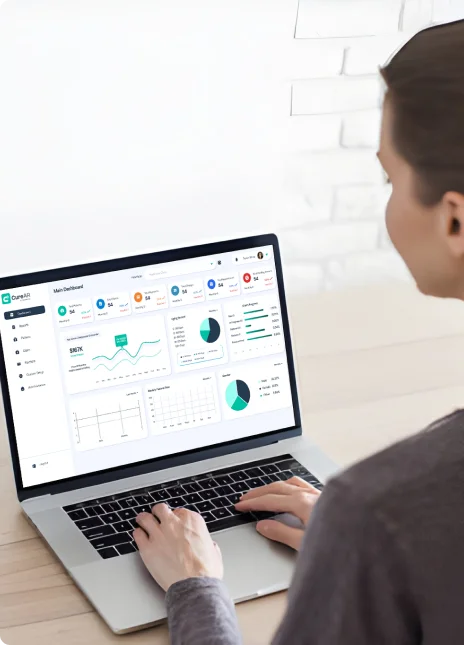

Healthcare reimbursement is becoming more complex each year. Claim denials, coding errors, and regulatory changes directly affect cash flow. According to the Centers for Medicare & Medicaid Services (CMS.gov), U.S. healthcare spending continues to grow steadily, increasing pressure on providers to optimize billing accuracy and operational efficiency. Choosing the right Medical Billing Software is no longer optional it is essential for financial stability and compliance.
The right platform does more than generate claims. It streamlines workflows, reduces denials, strengthens compliance, and improves patient payment experiences. This piece sheds light on the features every medical billing softwar should absolutely have to make the lives of billers easier.
How Medical Billing Software Manages the Financial Side of Healthcare Services
Medical Billing solution is a digital system that converts clinical documentation into billable claims, submits those claims to insurance payers, tracks payment status, and records reimbursements.
Instead of juggling spreadsheets, paper forms, and disconnected tools, billing teams use a centralized platform to handle the entire claims lifecycle. From patient registration to final payment posting, the system supports each financial step in a structured workflow.
Modern healthcare billing systems also integrate with Electronic Health Records (EHRs) and practice management platforms. This ensures that patient demographics, coding data, and charge details move smoothly between clinical and billing teams.
Empowering Teams and Leaders: How Billing Software Drives Financial Control
Billing teams face daily pressure to reduce denials, speed up collections, and maintain compliance. Administrators focus on financial stability and long-term growth. A well-designed billing solution supports both groups.
For billing staff, the system:
- Automates claim scrubbing to reduce manual errors
- Flags missing documentation before submission
- Organizes denial follow-ups in structured work queues
- Tracks payer responses in real time
For administrators, it:
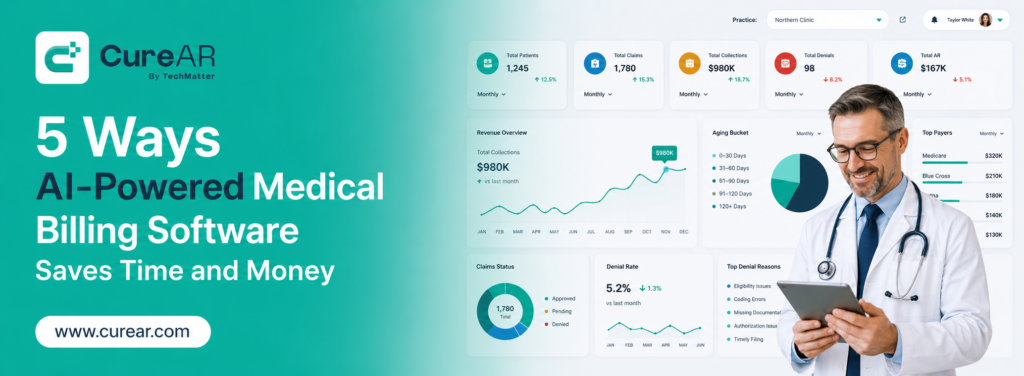
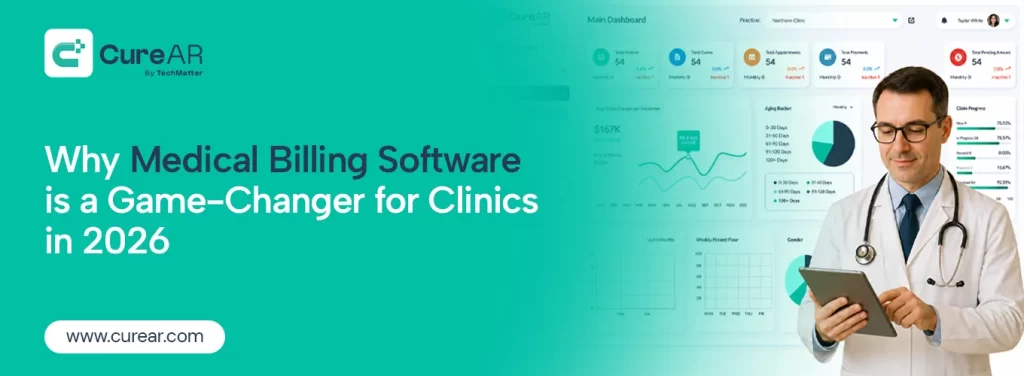
- Provides dashboards for financial performance
- Tracks Days in Accounts Receivable (A/R)
- Highlights payer-specific denial patterns
- Generates compliance and audit reports
Core Features That Define High-Performance Billing Systems
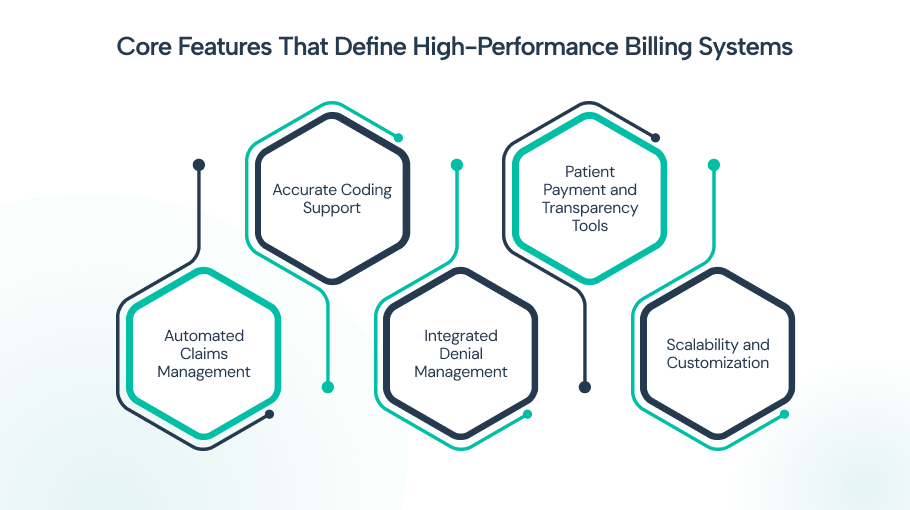
Not all billing platforms deliver the same value. Some focus only on claim submission, while others provide a comprehensive financial workflow solution. To remain competitive in 2026 and beyond, healthcare organizations need systems that integrate automation, analytics, compliance, and patient engagement into a single, streamlined environment.
Below are the essential features every modern billing solution should include.
1. Automated Claims Management
Automation is the backbone of efficient revenue operations. Manual processes increase the likelihood of errors and slow reimbursements.
A high-quality system should:
- Automatically scrub claims for formatting and coding errors
- Flag missing documentation before submission
- Track claim status in real time
- Generate alerts for rejected or delayed claims
The American Hospital Association (AHA.org) consistently highlights administrative complexity as a major cost driver for hospitals and physician groups. Automation directly reduces this burden by minimizing repetitive tasks and preventing avoidable denials.
2. Accurate Coding Support and Real-Time Updates
Coding accuracy directly impacts reimbursement. Outdated code libraries or incorrect documentation can trigger payer rejections and compliance risks.
A modern billing platform must offer built-in CPT, HCPCS, and ICD-10 validation, real-time code updates, documentation prompts for missing information, and specialty-specific coding logic.
The National Library of Medicine (NIH.gov) emphasizes that accurate clinical documentation significantly improves coding integrity and revenue capture. With built-in coding intelligence, practices can protect revenue while staying compliant.
3. Integrated Denial Management
Denials are inevitable, but unmanaged denials lead to revenue leakage. Effective systems do not just report denials they analyze them.
Essential capabilities include:
- Root-cause identification
- Automated denial work queues
- Appeal tracking
- Performance dashboards showing denial trends
This proactive approach helps teams resolve issues quickly and prevent recurring errors. Over time, denial analytics transform billing from reactive troubleshooting to structured performance improvement.
4. Patient Payment and Transparency Tools
Patient financial responsibility is higher than ever. Clear communication and convenient payment options are critical for maintaining satisfaction and accelerating collections.
Billing teams should look for features such as online payment portals, automated reminders via email or text, pre-visit cost estimation tools and flexible payment plan management. Digital billing transparency strengthens trust and improves collection rates without increasing administrative workload.
5. Compliance and Data Security Controls
Healthcare data security remains a top priority. HIPAA compliance is mandatory, and regulatory oversight continues to increase.
Medical Billing Software should provide role-based access permissions, end-to-end encryption, audit logs for all financial transactions and automatic compliance updates.
6. Seamless EHR and Practice Management Integration
Disconnected systems create inefficiencies and data inconsistencies. A modern healthcare billing solution must integrate seamlessly with Electronic Health Records (EHR) and scheduling tools.
Benefits include:
- Accurate patient demographics
- Real-time charge capture
- Reduced duplicate data entry
- Improved coordination between clinical and billing teams
When clinical and financial systems communicate effectively, reimbursement cycles shorten, and operational errors decline.
7. Advanced Reporting and Financial Analytics
Data-driven decision-making is now central to healthcare operations. A strong platform must provide real-time visibility into financial performance.
Key metrics should include:
- Days in Accounts Receivable (A/R)
- First-pass claim acceptance rate
- Collection ratios
- Payer-specific denial trends
When integrated with revenue cycle management software, analytics offer a complete view of operational and financial health. This allows leadership to identify revenue gaps, adjust workflows, and forecast future performance with greater accuracy.
8. Scalability and Customization
Healthcare organizations evolve over time. Whether expanding to multiple locations or adding new specialties, billing infrastructure must grow accordingly.
A scalable system should support:
- Multi-provider and multi-location setups
- Customizable workflows
- Flexible reporting configurations
- User-based access control
Scalability ensures that investments made today remain valuable in the future.
Conclusion
Selecting the right Medical Billing Software is a strategic decision that directly impacts financial stability. The most effective solutions combine automation, coding accuracy, denial management, integration, compliance controls, patient payment tools, analytics, and scalability.
As regulatory requirements and reimbursement models continue to evolve, practices must adopt systems that support long-term efficiency and growth. Investing in comprehensive billing technology today prepares healthcare organizations for the financial demands of tomorrow.
Ready to Strengthen Your Revenue Operations?
If your current billing system lacks these essential capabilities, now is the time to evaluate a modern solution. Upgrade your billing infrastructure to reduce denials, improve cash flow, and maintain compliance in an evolving healthcare landscape. Contact us today to learn how advanced billing technology can transform your revenue cycle performance.
Frequently Asked Questions
It manages claim creation, submission, tracking, and payment reconciliation to ensure accurate and timely reimbursement.
Through automated claim scrubbing, coding validation, and denial tracking analytics that identify and correct errors before submission.
It reduces duplicate data entry, improves documentation accuracy, and speeds up reimbursement cycles.
Look for HIPAA safeguards, encryption, audit logs, and role-based access controls.
Yes. Scalable solutions help small clinics improve efficiency, maintain compliance, and support growth without expanding administrative staff.