
Health information in the US is protected under the Health Insurance Portability and Accountability Act of 1996 (HIPAA), a major law. HIPAA is a set of regulations that all healthcare professionals must abide by to protect patient privacy.
Medical billing and coding involve converting doctor visits, treatments, and procedures into unique codes that insurance companies can understand. The bills are then procedurally generated for insurance companies for the patient care provided.
What is HIPAA?
Your private health information is protected by HIPAA, which functions as a shield. Consider it like a secure safe containing your test results, medical records, and personal information. HIPAA establishes guidelines for who is allowed to access this safe and when. There are various significant components to the law:
- The privacy rule serves as a guideline for protecting the privacy of medical data. It outlines what medical billing and coding businesses, insurance companies, hospitals, and doctors can and cannot do with your health information. For instance, they require your consent before sharing your medical records with anybody who requests them.
- Digital medical records, which are stored on computers and transmitted over the Internet, are the main subject of this regulation. It’s comparable to having a sophisticated safety mechanism for electronic medical records. According to this law, healthcare providers must protect electronic records from hackers and other unauthorized access by using strong passwords, encrypting sensitive data, and taking other security precautions.
- Healthcare providers are required by the breach notification rule to notify patients if their private information has been stolen or exposed. Similar to an alarm system, it notifies you if your medical records are compromised. If a large number of persons are exposed, healthcare providers are also required to notify the government and the press.
All of these protections are available to any business that collaborates with healthcare providers under the HIPAA omnibus rule. For instance, if a hospital contracts with an outside firm to manage its billing, that firm is likewise required to adhere to all HIPAA-compliant billing regulations. This guarantees that patient data is secure regardless of who handles it.
Why HIPAA is Important
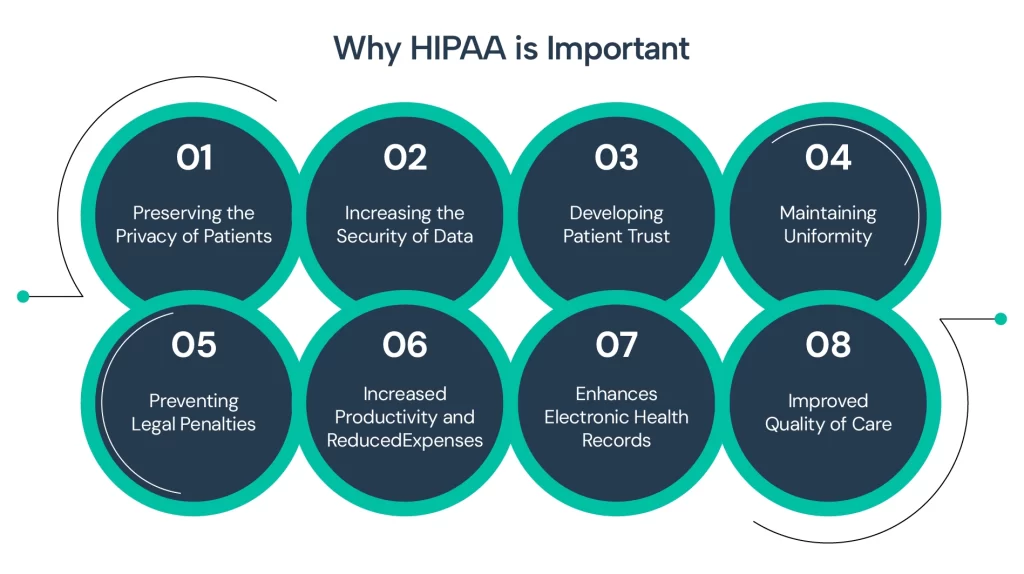
1: Preserving the Privacy of Patients
HIPAA establishes medical billing and coding invoicing guidelines to protect patient privacy. These rules regulate the transmission and access of health data. Medical records, bills, test results, and private data, such as names, addresses, insurance information, and appointment times, must all be kept secure by healthcare providers.
Patients have the option to choose who can access their medical records, read them, and see who has viewed them. If they believe someone has violated the privacy regulations, they can also file a complaint. Before exchanging information for purposes other than treatment, payment, or healthcare work, healthcare professionals must obtain the patient’s consent.
2: Increasing the Security of Data
HIPAA mandates that patient data be protected in multiple ways. Healthcare facilities need to train their employees, maintain security protocols, and conduct routine risk assessments. They require physical security, like cameras and closed doors. They also require computer security features like encrypted data and password protection.
Every employee is given a login, and the system keeps track of who views patient data. Unwanted access can be prevented with regular adjustments and monitoring. In an emergency, backup procedures must be in place to protect patient data. Employees receive continual training on these safety precautions.
3: Developing Patient Trust
Patients might have more faith in their healthcare providers thanks to HIPAA. Patients are more comfortable disclosing personal health information when they are aware that the law protects it. Patients may be assured that their information will be protected because the law clearly penalizes privacy abuses.
Healthcare providers are required to make sure patients are aware of their rights and to explain their privacy policies. This transparency fosters trust. From routine examinations to specialized care, HIPAA safeguards patient data in all healthcare settings. Patients feel safer receiving medical care because of these uniform privacy regulations.
4: Maintaining Uniformity
HIPAA mandates that all healthcare providers use the same systems and formats. This implies that all healthcare practitioners handle medical billing and coding in the same way. It is simpler to process insurance claims accurately and promptly when everyone follows the same procedures.
When necessary, medical personnel can easily communicate with patients. Doctors can collaborate more effectively and make quicker, more precise judgments as a result. The same formats are also useful for monitoring health trends in various clinics and hospitals.
5: Preventing Legal Penalties
There are severe repercussions for violating HIPAA regulations. Accident fines start at $100, while significant infractions can result in fines of up to $50,000. $1.5 million is the highest annual fine for all offenses.
Serious infractions may potentially result in criminal charges against healthcare providers. They must maintain documentation of their privacy procedures and conduct routine compliance checks. Regular training on HIPAA regulations is necessary for staff. Healthcare facilities need to be able to promptly notify and address any infractions.
6: Increased Productivity and Reduced Expenses
HIPAA compliance improves healthcare by removing the need to convert data between different systems, and standard formats save time. Repeated testing is less necessary because electronic records make it simple to quickly locate and exchange patient data.
By using less paper and committing fewer errors, healthcare offices can save money. Maintaining accurate medical histories is easier because digital data is less expensive to store. Cash flow improves with the quicker and more accurate processing of insurance claims. Healthcare professionals can now spend more time assisting patients because of these advancements.
7: Enhances Electronic Health Records
HIPAA facilitates the utilization of contemporary digital healthcare systems. The law describes how to keep electronic records safe while enabling their use. Healthcare professionals can quickly review patient histories thanks to digital technologies, which helps them make better decisions.
They can monitor patient care across time and among several physicians. Electronic records can be examined by medical offices to identify areas for treatment improvement. Because digital records are easily readable and automatically check for drug interactions, they help avoid errors. They also facilitate collaboration between several healthcare providers.
8: Improved Quality of Care
Physicians can provide better care because of HIPAA’s information-sharing regulations. Providers make better treatment decisions when they have safe access to full patient histories. Information exchange between healthcare professionals helps coordinate care and avoid unnecessary testing.
When all of their providers get the most up-to-date information, patients receive better care. Better therapy and a quicker diagnosis result from secure and prompt information sharing. Monitoring the effectiveness of therapies and making necessary adjustments is made simple by electronic records.
Conclusion
For medical billing and coding, HIPAA is essential since it guarantees the security of patient data. Achieving these standards involves more than just staying out of trouble; it also involves upholding patient confidence and providing quality medical care.
When managing patient data, healthcare professionals must closely adhere to HIPAA regulations. Understanding these obligations, our HIPAA-complaint medical billing software makes significant efforts to protect data while delivering effective billing services. When you choose Cure AR, you get a secure and effective billing system without breaking the bank.
Frequently Asked Questions
HIPAA sets the standard for protecting patient data. It ensures that claim processing professionals handle sensitive health information securely and only share it when necessary for treatment, payment, or operations.
By enforcing strict privacy and security rules, HIPAA gives patients confidence that their personal health information will remain confidential, fostering greater trust between patients and healthcare providers.
HIPAA violations can result in fines ranging from a few hundred dollars for minor mistakes to over $50,000 for serious breaches, along with potential criminal charges for deliberate misconduct.
HIPAA encourages secure digital transformation by setting standards for protecting electronic health data. This allows for safer, faster, and more efficient record sharing across healthcare systems.
Compliance is not just a legal requirement; it ensures consistent billing practices, reduces operational costs, enhances collaboration, and helps maintain a high standard of patient care across the healthcare system.